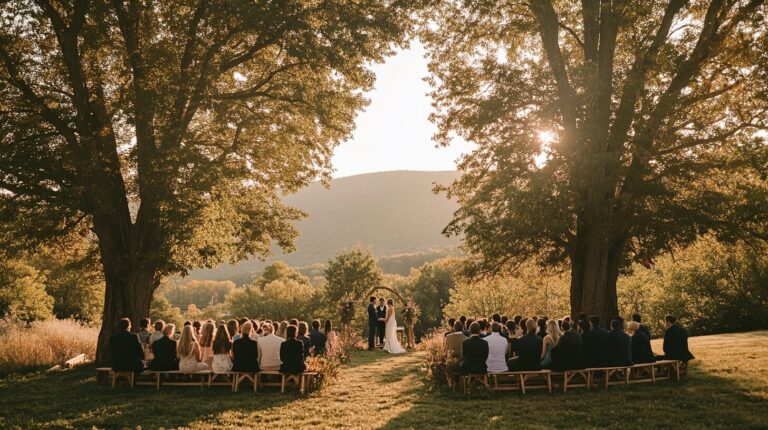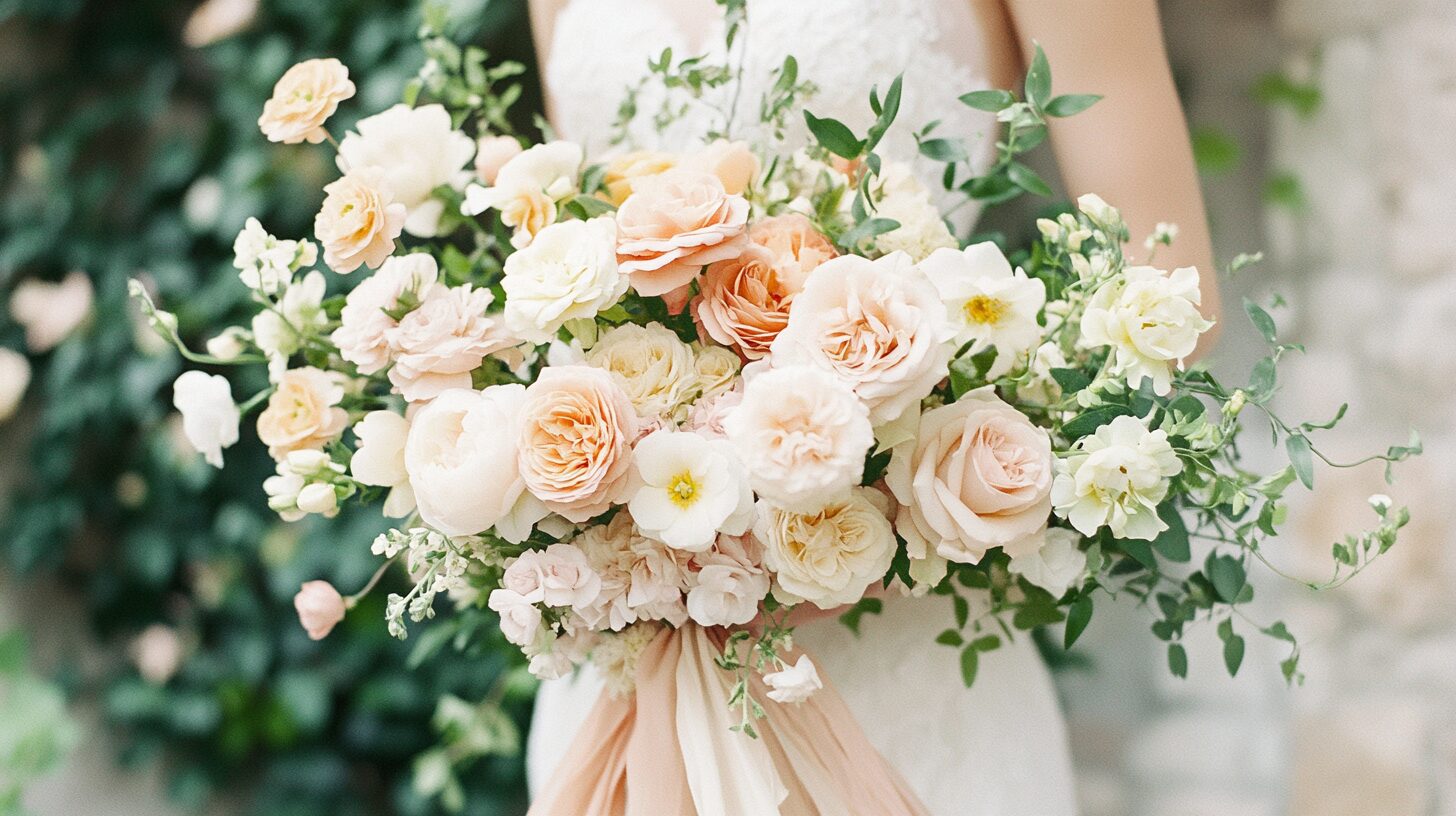
I have a confession: I judge a wedding by its flowers. Not because florals are the most important element — they are not — but because flowers tell you everything about whether a celebration was designed with intention or assembled from a checklist. The difference between flowers that feel like they belong and flowers that feel like they were ordered is enormous, and it almost always comes down to one thing: seasonality.
Why Seasonal Matters More Than You Think
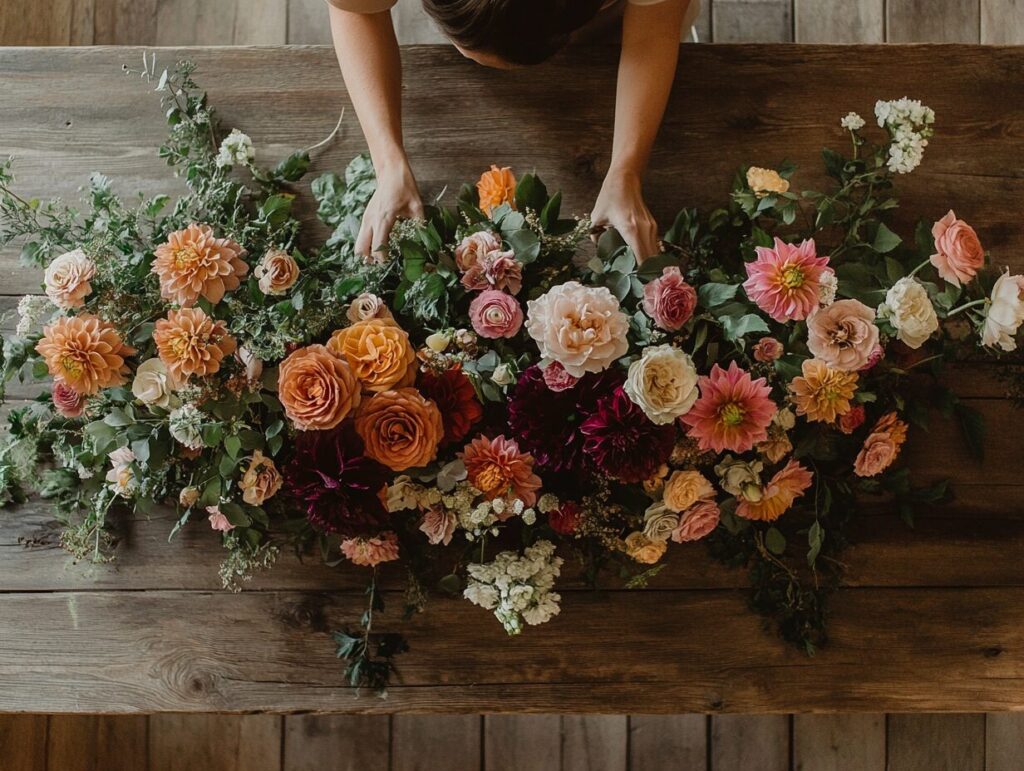
When a bride tells me she wants peonies for her October wedding, I do not say no. I say let me show you what October gives us. Because what October gives us — dahlias the size of your fist, garden roses with forty petals, ranunculus in every shade of amber, branches heavy with autumn fruit — is breathtaking. It is also abundant, which means your florist can be generous instead of precious with the arrangements.
Out-of-season flowers are not just expensive. They are fragile. They have been shipped from another hemisphere, held in cold storage, and asked to perform on a timeline that fights their biology. Seasonal flowers, on the other hand, arrive robust, fragrant, and full. They last longer in the heat. They look alive because they are.
The Hudson Valley Flower Calendar
One of the privileges of planning weddings in the Hudson Valley is access to extraordinary local growers. Here is what I reach for in each season, though every year brings its own gifts.
Spring weddings get tulips, ranunculus, sweet peas, lilac, and the very first peonies if we time it right. The palette is soft — blush, cream, lavender, tender greens. Everything feels like it just unfurled.
Summer is abundant and joyful. Garden roses are in their glory. We have dahlias starting in July, lisianthus, snapdragons, zinnias from local farms, and herbs like rosemary and chamomile that add texture and scent. Colors can go bold or stay soft.
Autumn is my personal favorite for florals. The palette deepens — burgundy, terracotta, amber, chocolate cosmos. We bring in branches with turning leaves, persimmons, figs, and pomegranates. The arrangements feel gathered rather than arranged, which is always more beautiful.
Winter weddings are the most architectural. Evergreen, eucalyptus, hellebores, amaryllis, anemones. The palette is typically cream, forest green, and deep plum. Candlelight does most of the work, and the flowers become sculptural.
How I Work With Florists
I do not design the florals — your florist does, and they are the expert. What I do is translate the feeling of your wedding into language that helps your florist create something extraordinary. I build mood boards that are specific and evocative. I communicate not just colors but textures, movement, density, and scent. I know which local farms are growing what, and I know which florists in the region will push creative boundaries versus which will give you reliable, classic beauty. Both are valuable. The match matters.
The Arrangement That Changed How I Think About Flowers
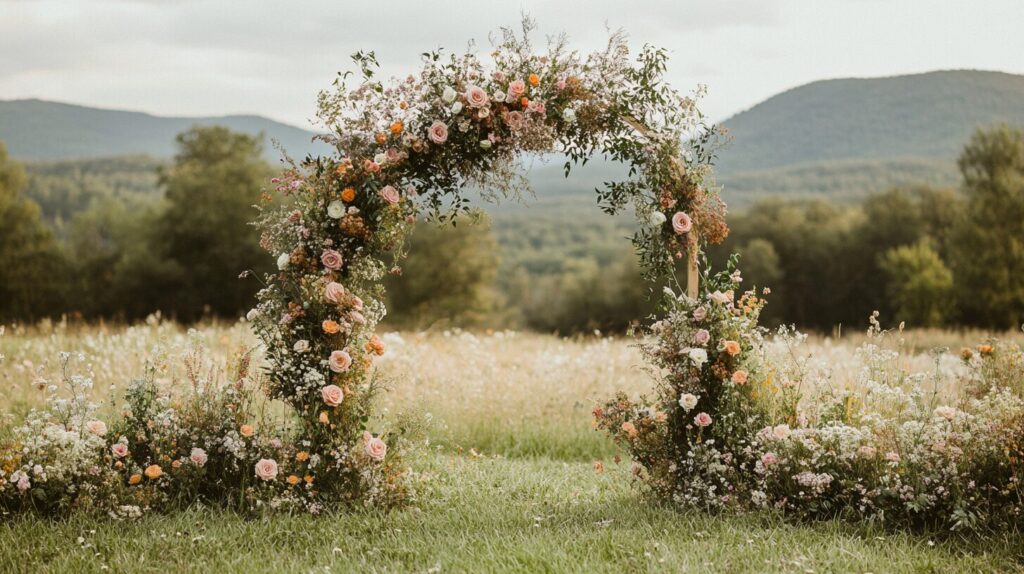
Three years ago, I worked with a couple who got married at a converted barn in Rhinebeck. The florist, working with what was available that September week, created a ceremony arch from wild grasses, climbing roses still on the vine, and branches of unripe crabapples. It looked like it had grown there. The bride cried when she saw it, and honestly, so did I. That is what happens when you trust the season.
Dreaming about your wedding florals? Let us talk about what your season has to offer.